
If you’re considering Civil Engineering at AUB, you probably want more than a list of courses. You want to know what you will actually study, how the program is structured, what the workload looks like, and where the degree can take you after graduation.
AUB’s Civil Engineering program is offered through the Department of Civil and Environmental Engineering (CEE) within the Maroun Semaan Faculty of Engineering and Architecture (MSFEA). The current undergraduate curriculum combines structural engineering, construction, geotechnical engineering, water resources, environmental engineering, transportation, and materials, giving students exposure to several areas of civil engineering before graduation.
What Is Civil Engineering at AUB Like?
Civil Engineering at AUB is designed as a broad engineering degree rather than a program focused on only one area of the profession.
The current Bachelor of Engineering (BE) curriculum requires 150 credit hours and is organized across 11 terms. The sequence includes regular fall and spring semesters, summer terms, an approved professional experience component, and a two-part final-year project.
Students encounter the fundamentals of engineering early, then gradually move into more specialized civil engineering subjects.
The program includes areas such as:
- Structural engineering
- Construction engineering and management
- Geotechnical engineering
- Water resources
- Environmental engineering
- Transportation engineering
- Materials
This breadth can be useful if you enter AUB knowing that you want to become a civil engineer but are not yet sure whether structures, transportation, construction, or another area is the right fit.
What Do You Study in Civil Engineering at AUB?
The AUB Civil Engineering courses become progressively more specialized as you move through the curriculum.
Early coursework establishes the mathematical, scientific, and engineering foundation. The current catalogue includes courses such as Engineering Drawings and Tools, Calculus, Differential Equations, Physics, Statics, Surveying, and Engineering Geology.
Early Civil Engineering Courses
Some of the courses appearing early in the current curriculum include:
- CIVE 201: Engineering Drawings and Tools
- CIVE 210: Statics
- CIVE 301: Surveying
- CIVE 330: Engineering Geology
- CIVE 310: Mechanics of Materials
- CIVE 370: Construction Materials and Technologies
Students also take mathematics, physics, programming, technical English, statistics, and engineering-related courses alongside their civil engineering requirements.
Upper-Level Civil Engineering Courses
As the program progresses, students take courses covering structures, fluids, soils, transportation, construction, and water and environmental systems.
The current curriculum includes:
- CIVE 311: Theory of Structures
- CIVE 340: Fluid Mechanics and Laboratory
- CIVE 413: Concrete Design I
- CIVE 430: Soil Mechanics and Laboratory
- CIVE 440: Hydraulics and Laboratory
- CIVE 460: Transportation Engineering and Laboratory
- CIVE 461: Highway Engineering
- CIVE 421: Construction Management
- CIVE 431: Foundation Engineering
Students can also take technical electives in areas such as structures, construction, water resources, environmental engineering, and other CEE fields.
How Difficult Is Civil Engineering at AUB?
Civil Engineering at AUB is a demanding technical major, particularly because many courses build on concepts introduced earlier in the program.
Mathematics, physics, mechanics, and problem-solving are not isolated requirements. They become part of later engineering courses.
For example, students take Statics before moving into Mechanics of Materials and Theory of Structures. Later courses build on these engineering fundamentals.
This means that falling behind in an early technical course can make later subjects more difficult.
A good approach is to treat the program as cumulative rather than studying only before exams. Regular problem-solving, keeping up with assignments, and asking for help early can make a significant difference.
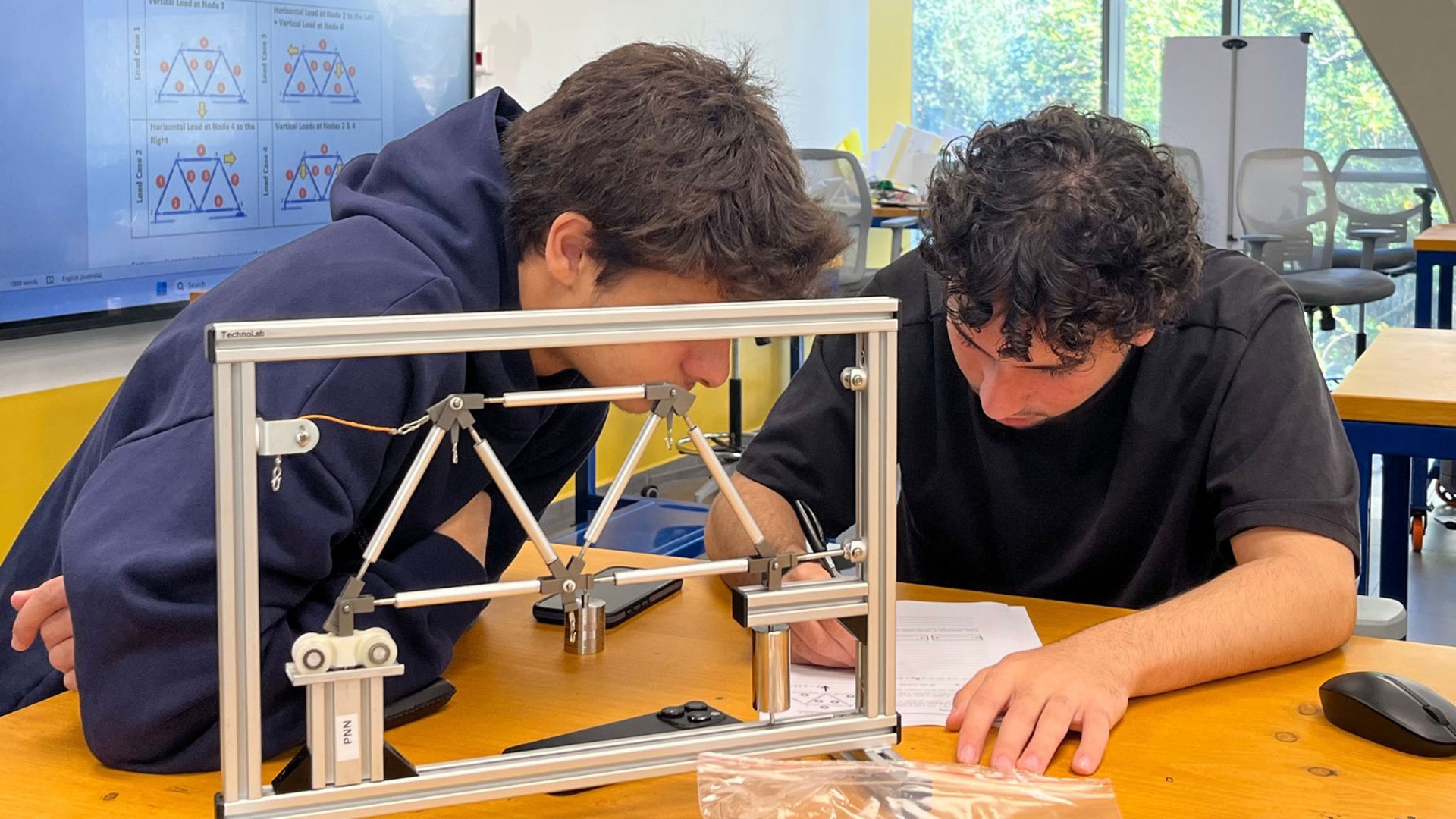
The workload also isn’t limited to traditional lectures. The curriculum includes laboratory-based courses such as Fluid Mechanics and Laboratory, Soil Mechanics and Laboratory, Hydraulics and Laboratory, and Transportation Engineering and Laboratory.
Does Civil Engineering at AUB Include Practical Experience?

Yes. Practical and applied work is built into the curriculum.
Several courses include laboratory components, while the program also includes an Approved Experience requirement during the ninth term. The final year then includes Final Year Project I and Final Year Project II, giving students a substantial opportunity to apply engineering knowledge to a project.
This progression is important because civil engineering is ultimately a profession that connects calculations and theory to physical infrastructure.
Depending on your courses and electives, your studies can involve subjects related to structures, construction, soils, water systems, transportation, materials, and environmental engineering.
What Areas Can You Explore in AUB Civil Engineering?
One of the advantages of the program is its range.
The Department of Civil and Environmental Engineering organizes its undergraduate curriculum around several areas, including:
Structural Engineering
Structural engineering focuses on how buildings and other structures carry loads and respond to different forces.
Students interested in this area may gravitate toward structural analysis, concrete design, foundation engineering, and related technical electives.
Construction Engineering and Management
This area connects engineering with the planning and management of construction projects.
AUB’s undergraduate curriculum includes Construction Management, while the department also offers coursework related to construction engineering and management.
Geotechnical Engineering
Geotechnical engineering deals with soil, foundations, and the interaction between structures and the ground.
Courses such as Soil Mechanics and Laboratory and Foundation Engineering provide part of this foundation.
Water and Environmental Engineering
Students can also explore water resources and environmental engineering through courses and technical electives related to hydrology, water treatment, wastewater treatment, and environmental systems.
Transportation Engineering
Transportation is another major area within the curriculum, with courses including Transportation Engineering and Laboratory and Highway Engineering.
What Is Student Life Like for Civil Engineering Students?
Being a civil engineering student at AUB is not only about attending lectures and solving equations.
The curriculum includes laboratory work, engineering projects, technical electives, approved professional experience, and a final-year project. That means students gradually move from learning engineering principles to applying them.
Your experience will also depend heavily on the courses you choose, the people you work with, and how involved you become in the wider MSFEA community.
For incoming students, one practical piece of advice is to avoid thinking of your major as something completely separate from the rest of AUB. Engineering students still have access to the university’s broader student organizations, activities, services, and campus community.
What Can You Do After Studying Civil Engineering at AUB?
A Civil Engineering degree can lead to several different professional directions.
Depending on your interests and further qualifications, potential paths include:
- Structural engineering
- Construction and project management
- Geotechnical engineering
- Transportation engineering
- Water resources engineering
- Environmental engineering
- Engineering consulting
- Infrastructure development
- Graduate study and research
The breadth of AUB’s CEE curriculum can be particularly useful for students who want to explore different areas before committing to a narrower professional direction.
The department also offers graduate programs in civil engineering and related fields, giving students a potential pathway into further specialization. AUB’s graduate catalogue currently lists Civil Engineering among its graduate engineering programs.
Is Civil Engineering at AUB Right for You?
Civil Engineering at AUB may be a good fit if you enjoy applying mathematics and physics to real-world problems.
It can suit students who are interested in questions such as:
- How are buildings and bridges designed?
- How do structures respond to loads?
- How do engineers design foundations?
- How are transportation systems planned?
- How can water and wastewater systems be managed?
- How are large construction projects organized?
You should also be comfortable with a program that becomes increasingly technical as you progress.
If you strongly dislike mathematics, physics, technical problem-solving, laboratory work, or long-term projects, Civil Engineering may feel frustrating.
But if you enjoy understanding how physical systems work and want a degree connected to infrastructure and the built environment, Civil Engineering at AUB is worth exploring.
Frequently Asked Questions About Civil Engineering at AUB
How many credits are required for Civil Engineering at AUB?
The current AUB undergraduate curriculum lists 150 credit hours for the Bachelor of Engineering in Civil Engineering.
How long is the Civil Engineering program at AUB?
The current curriculum is organized across 11 terms, including summer terms, an approved experience term, and two final-year project terms.
What courses do Civil Engineering students take at AUB?
Students take courses covering engineering fundamentals, structures, construction, fluids, soils, transportation, water resources, environmental engineering, and other areas. Examples include Statics, Mechanics of Materials, Theory of Structures, Fluid Mechanics, Soil Mechanics, Concrete Design, Transportation Engineering, and Foundation Engineering.
Is Civil Engineering at AUB difficult?
It is a demanding technical program that requires consistent work in mathematics, physics, mechanics, and engineering problem-solving. Because later courses build on earlier material, staying on top of foundational courses is important.
What careers can you pursue after Civil Engineering at AUB?
Graduates can pursue careers in areas such as structural engineering, construction, geotechnical engineering, transportation, water resources, environmental engineering, consulting, and infrastructure. Graduate study is another option.
Final Thoughts: Is Civil Engineering at AUB Worth It?
If you’re looking for an engineering degree that gives you exposure to several areas of the civil engineering profession, Civil Engineering at AUB offers a broad and technically demanding curriculum.
The current program combines foundational engineering subjects with structures, construction, geotechnical engineering, water, environmental engineering, transportation, and materials. It also includes laboratory courses, approved professional experience, technical electives, and a two-part final-year project.
The main thing to understand before choosing the major is that it is not an easy path simply because you like buildings or construction. You will spend significant time working with mathematics, physics, mechanics, technical analysis, and engineering design.
If that sounds like the kind of challenge you want, Civil Engineering at AUB can provide a strong foundation for entering the profession or continuing into graduate study.
For the most current requirements and course information, always check AUB’s latest undergraduate catalogue because the university notes that programs, course offerings, requirements, and teaching staff can change.