

Education and Survival in a Divided Country
On April 13, 1975, Lebanon entered a period of violence that would last fifteen years and transform the country’s political, social, and educational institutions. The incident that triggered the conflict—the attack on a bus carrying Palestinian civilians in Beirut—marked the beginning of the Lebanese Civil War.
Over the next decade and a half, Lebanon experienced one of the most destructive conflicts in modern Middle Eastern history. Historians estimate that the war caused around 150,000 deaths and left roughly 17,000 people missing, while hundreds of thousands were displaced and much of the country’s infrastructure was damaged. (AP News)
In the midst of this conflict, universities across Lebanon struggled to survive. Among them was Lebanese American University—known during the war years as Beirut University College (BUC).
For students who attended the institution between 1975 and 1990, university life unfolded against the backdrop of bombings, militia checkpoints, and political instability. Yet despite these extraordinary challenges, the university continued to educate thousands of students who believed that higher education remained essential even during national crisis.
Beirut University College on the Eve of War
Before it became the Lebanese American University, the institution was known as Beirut University College (BUC).
Originally founded as a women’s college in 1924, the institution gradually expanded its academic offerings and student body during the mid-twentieth century. In 1973, the college officially adopted the name Beirut University College, reflecting its growing academic scope. (LAU)
The following year, in 1974, the institution became fully co-educational and began admitting men into all programs. (SArD Website)
This transformation occurred just one year before the outbreak of the Lebanese Civil War.
At the time, Beirut was widely regarded as the intellectual and cultural capital of the Arab world. Universities such as BUC attracted students from Lebanon and neighboring countries who sought an American-style liberal arts education.
However, the outbreak of war in 1975 would fundamentally reshape the institution’s environment.
The War Reaches Beirut’s Universities
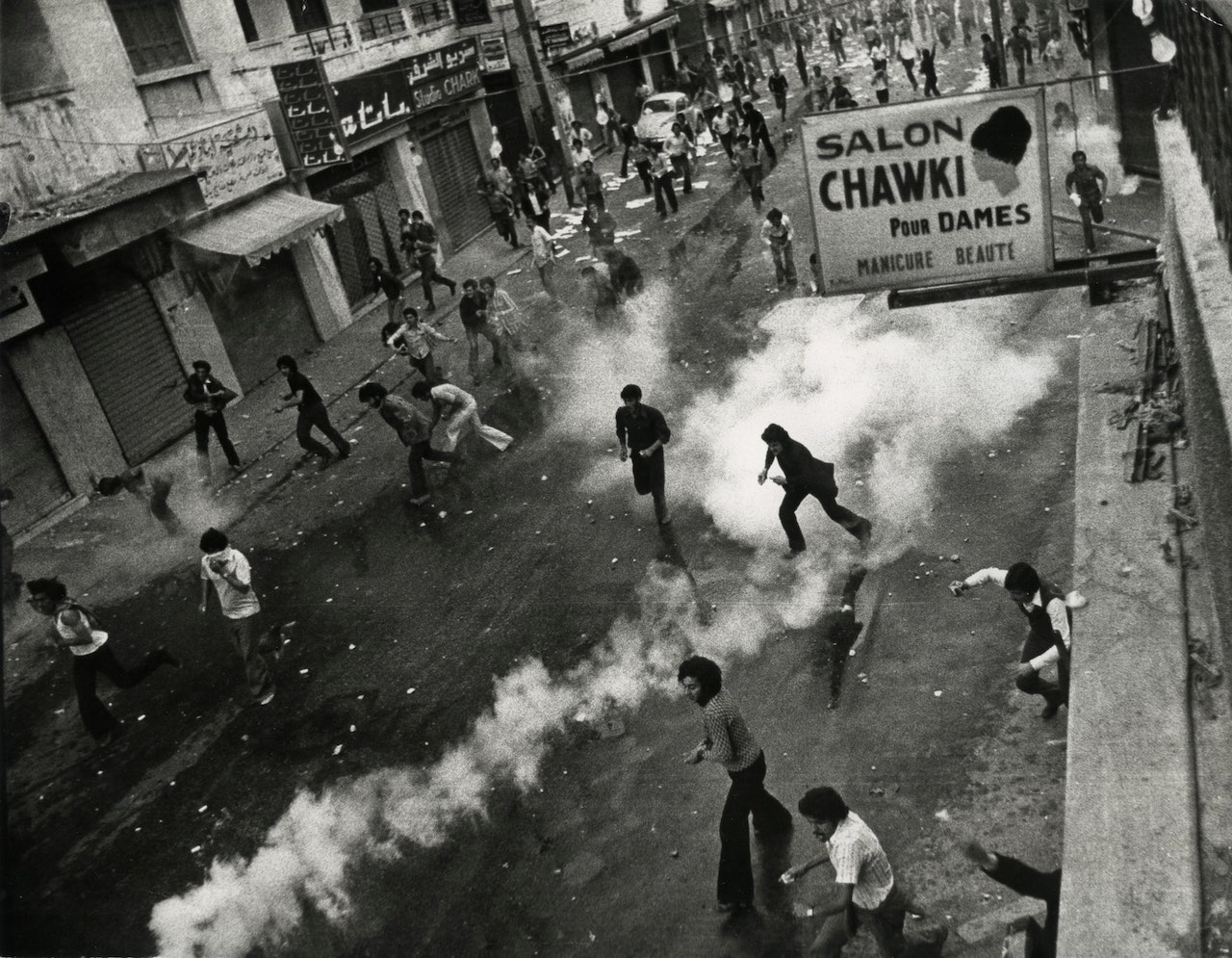
The Lebanese Civil War quickly spread throughout the capital after the April 1975 bus attack. Militias representing different political and sectarian groups established control over neighborhoods, and the city was gradually divided into rival territories.
Educational institutions found themselves operating in a fragmented urban environment where transportation, electricity, and security could not be guaranteed.
For Beirut University College, the immediate impact was dramatic.
By Fall 1976, enrollment at the institution had dropped by more than 80 percent as many students left the country or were unable to reach campus due to the fighting. (SArD Website)
Despite this decline, the college continued operating.
Faculty members and administrators believed that maintaining higher education during wartime was essential for Lebanon’s future.
Student Life During the Civil War

For students who remained in Beirut, attending university during the war required extraordinary determination.
Daily life involved constant uncertainty. Students often woke up unsure whether they would be able to reach campus safely.
Militia checkpoints controlled many roads, and crossing the city sometimes required passing through several armed positions. Travel that once took fifteen minutes could take hours—or become impossible if fighting erupted.
Electricity outages were frequent. Many students studied by candlelight during power cuts or prepared assignments while listening to the distant sound of artillery.
Air raid sirens and shelling sometimes forced classes to stop abruptly.
Yet even in these conditions, students continued to attend lectures, write papers, and prepare for examinations.
Education became a symbol of resilience.
For many young people, remaining in university represented a refusal to allow war to define their future.
Expanding Education Despite the War
One of the most remarkable aspects of Beirut University College’s history during the civil war was its ability to expand educational access even while the country was experiencing severe violence.
In 1978, the institution established an off-campus educational center in the northern region of Lebanon known as the Louaizeh Center of Higher Education.
The following year, in 1979, another educational center opened in Sidon (Saida) in southern Lebanon. (LAU)
These new locations were created specifically to provide access to higher education for students who could not travel safely to Beirut due to the conflict.
The expansion demonstrated how universities adapted creatively to the challenges of war.
Rather than reducing educational opportunities, the institution sought ways to extend them to students across the country.
Academic Life Under Constant Pressure
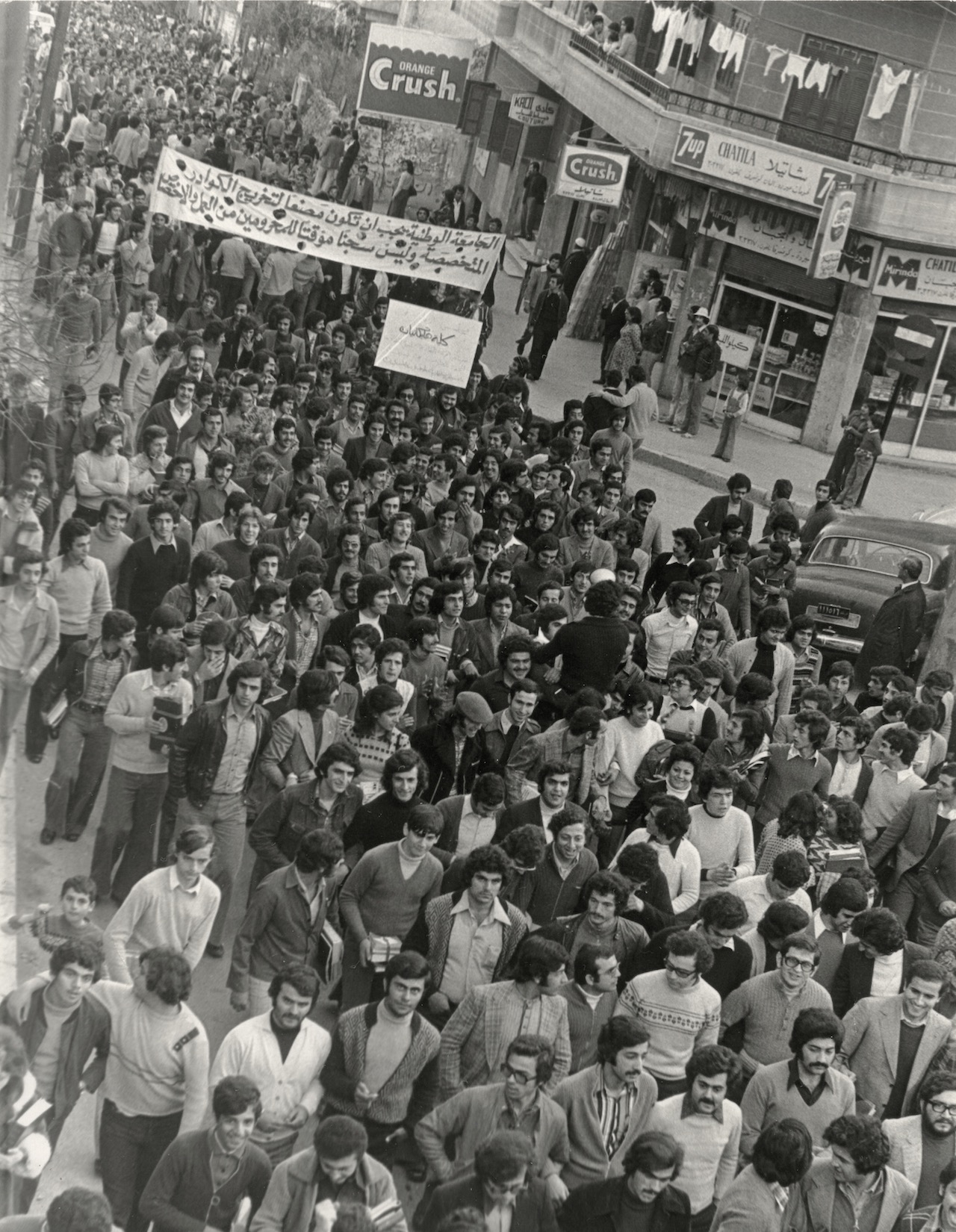
Even though Beirut University College remained open, academic life during the war was far from normal.
Classes were sometimes canceled due to security concerns, and academic calendars often had to be adjusted depending on the intensity of fighting.
Professors faced their own difficulties.
Some faculty members emigrated during the conflict, while others struggled with transportation challenges and safety risks.
Despite these obstacles, many professors remained committed to teaching.
Students frequently recall how instructors continued delivering lectures even when explosions could be heard outside the classroom.
This commitment to education helped preserve a sense of continuity during a time when much of Lebanese society was collapsing.
The Social Role of Universities During War
Universities often play an important social role during times of political conflict, and Beirut University College was no exception.
The campus served as one of the few spaces in Lebanon where students from different regions and communities could interact during the war.
Lebanese society during the conflict became increasingly divided along sectarian and political lines. Many neighborhoods were effectively segregated.
Universities, however, continued to bring together students from diverse backgrounds.
This environment allowed for debate, discussion, and intellectual exchange even during periods of intense political polarization.
For many students, university life offered a rare opportunity to engage with perspectives different from their own.
Psychological Challenges for Students
Studying during the Lebanese Civil War also had significant psychological consequences.
Many students experienced anxiety and stress due to the constant threat of violence.
Some had family members involved in the conflict, while others lost homes or relatives during the fighting.
Economic instability further complicated the situation.
Lebanon’s economy deteriorated dramatically during the war, and inflation made it difficult for many families to pay tuition fees.
Nevertheless, thousands of students continued their education despite these hardships.
The university environment offered a sense of stability and normalcy amid the chaos of war.
Leadership During the War Years
Leadership played a critical role in ensuring the survival of Beirut University College during the conflict.
In 1982, Dr. Riyad Nassar became president of the institution and helped guide it through some of the most difficult years of the civil war.
During his tenure, the university not only survived but also began planning for expansion after the war ended. (LAU Magazine & Alumni Bulletin)
His leadership reflected a broader commitment among university administrators to maintain academic standards even during national crisis.
This approach helped position the institution for transformation once the war concluded.
The End of the War and Institutional Transformation
The Lebanese Civil War officially ended in October 1990 following the implementation of the Taif Agreement.
By that time, Lebanon had endured fifteen years of political violence, foreign interventions, and economic devastation.
For Beirut University College, the end of the war opened the door to institutional transformation.
In the early 1990s, the institution began expanding its academic programs and infrastructure.
New fields such as engineering, architecture, and pharmacy were introduced.
Eventually, the institution evolved into what is now known as the Lebanese American University.
The creation of a modern campus in Byblos during the early 1990s further expanded educational opportunities for students across Lebanon. (LAU)
The Legacy of Students Who Studied During the War
The students who attended Beirut University College between 1975 and 1990 represent a unique generation in Lebanon’s history.
Their university experience was shaped by extraordinary circumstances.
They studied during air raids, traveled through militia checkpoints to reach class, and completed degrees in a country facing deep political and economic crisis.
Yet many of these students went on to become leaders in fields such as medicine, journalism, business, and government.
Their experiences during the civil war influenced how they approached leadership, resilience, and social responsibility.
The story of their education demonstrates how universities can continue functioning even during periods of national collapse.
Conclusion
The experience of students at Beirut University College during the Lebanese Civil War illustrates the resilience of education in the face of conflict.
While Lebanon endured 15 years of violence between 1975 and 1990, universities like BUC continued to educate young people who believed in the importance of knowledge and intellectual exchange.
Despite enrollment drops, security risks, and economic hardship, the institution remained committed to its academic mission.
Today, the Lebanese American University stands as a reminder of that resilience.
Its history during the civil war reflects the determination of students, professors, and administrators who refused to allow war to destroy the pursuit of education.
Their story remains a powerful example of how learning can persist even in the most difficult circumstances.