

Education Amid Conflict
On April 13, 1975, Lebanon entered a devastating conflict that would reshape the country for generations. The incident that ignited the war—a deadly bus attack in Beirut—quickly escalated into a nationwide civil war involving militias, foreign armies, and political factions. Over the next 15 years, Lebanon would experience one of the most destructive conflicts in the modern Middle East.
The human toll was staggering. Historians estimate that the Lebanese Civil War (1975–1990) caused approximately 150,000 deaths, left around 200,000 seriously wounded, and resulted in about 15,000 people missing or disappeared. The conflict also displaced roughly 500,000 people inside the country, at a time when Lebanon’s total population was only about three million. (American University of Beirut)
In the middle of this chaos stood one of the region’s most respected institutions of higher learning: the American University of Beirut.
For thousands of students who attended AUB during the war, pursuing higher education meant studying in a city divided by front lines, surrounded by artillery fire, and constantly threatened by political violence.
The American University of Beirut Before the War

Founded in 1866 as the Syrian Protestant College, the American University of Beirut quickly developed into a leading academic institution in the Middle East.
The university adopted an American liberal-arts model of education, emphasizing critical thinking, interdisciplinary learning, and research. By the early 1970s, AUB attracted students from across Lebanon, the Arab world, Africa, Asia, and Europe.
Before the civil war began, the university had built a reputation as one of the region’s intellectual centers. Its location in Ras Beirut overlooking the Mediterranean Sea symbolized openness to international ideas and academic exchange.
In the mid-1970s, AUB enrolled several thousand students from more than 70 countries, creating a multicultural campus environment that was rare in the Middle East.
But the political tensions building across Lebanon would soon reach the university’s gates.
The Outbreak of the Lebanese Civil War (1975)
The Lebanese Civil War officially began on April 13, 1975, when gunmen attacked a bus carrying Palestinian civilians in the Beirut neighborhood of Ain el-Remmaneh.
The attack killed 27 passengers, triggering widespread fighting between militias aligned with different political and sectarian groups.
Within months, Beirut was divided into two major sectors:
- East Beirut, controlled largely by Christian militias
- West Beirut, controlled by Muslim and leftist factions
The American University of Beirut was located in West Beirut, placing it in the center of intense fighting during many phases of the war.
As militias established checkpoints across the city, traveling even short distances became dangerous. Students often had to pass through armed checkpoints simply to attend class.
Student Life in a City at War
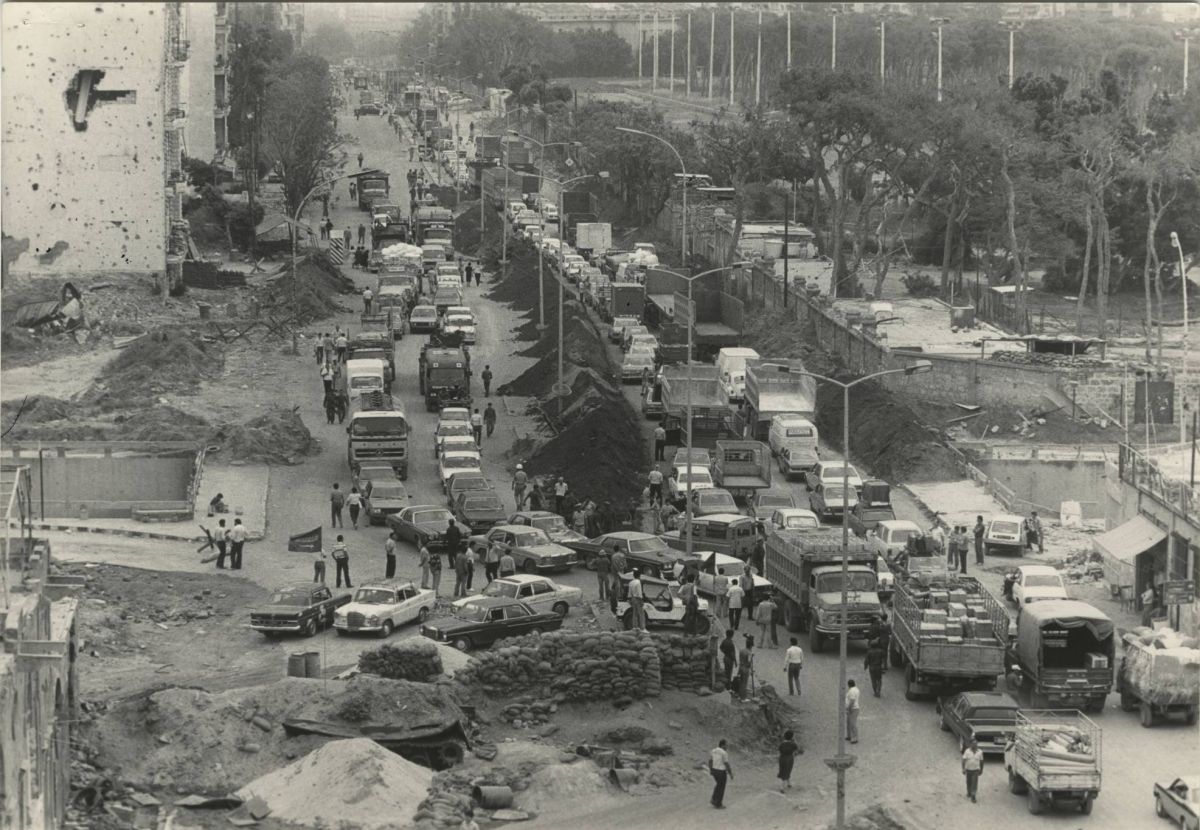
For students attending AUB during the civil war, daily life became unpredictable.
Classes could be interrupted by nearby shelling. Roads were frequently blocked by fighting. Electricity outages and water shortages were common throughout Beirut.
Despite these conditions, the university attempted to continue operating whenever possible.
Students often adapted their routines to wartime conditions:
- studying during power outages using candles
- sleeping in hallways or safer parts of dormitories during heavy shelling
- organizing study groups when professors could not reach campus.
Some students lived in university dormitories for safety, while others risked traveling across divided neighborhoods each day.
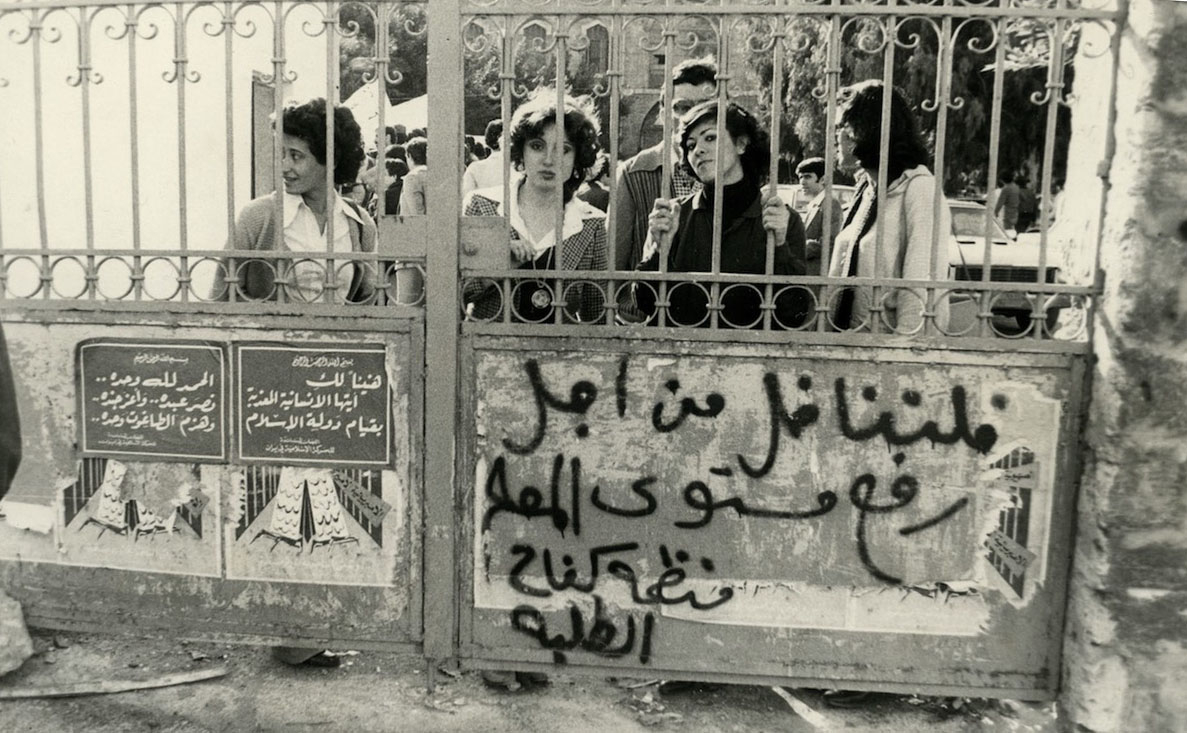
Yet education remained a priority. Many students believed that continuing their studies represented a form of resistance against the chaos surrounding them.
The AUB Medical Center and War Casualties
One of the most important roles played by the university during the civil war was through its hospital, the American University of Beirut Medical Center.
Throughout the conflict, the hospital became one of Beirut’s most critical emergency medical facilities.
According to historical reports:
- The hospital treated 12,419 war-wounded patients as outpatients.
- It admitted 5,733 injured casualties for treatment.
- It received 2,570 people who were dead on arrival.
In total, the hospital handled more than 20,000 war casualties during the conflict. (AramcoWorld)
During some of the most intense battles, the emergency room reportedly treated 60 casualties within a single hour. (AramcoWorld)
Doctors, nurses, and medical students worked under extremely difficult conditions, including shortages of electricity, water, fuel, and medical supplies.
Despite these obstacles, the hospital treated patients from all sides of the conflict, reflecting the university’s commitment to neutrality.
Early War Casualties Treated at AUB
During the early stages of the war, the number of casualties arriving at the university hospital was already enormous.
Between April 1975 and November 1976, the emergency department at AUB treated 8,324 war casualties. (Anesthesia Key)
Analysis of these injuries showed:
- 66% were caused by shrapnel from artillery and explosions
- 29% were bullet wounds
- 5% were blast injuries or severe burns. (Anesthesia Key)
Most casualties were young men between the ages of 14 and 30, reflecting the demographics of militia fighters and civilians caught in crossfire.
For medical students at AUB, this environment transformed their education. Instead of learning only through textbooks, they gained direct experience treating wartime injuries.
Violence Reaches the Campus
Although the university attempted to remain politically neutral, it was not immune from violence.
During one major artillery bombardment, the AUB campus was hit by 85 shells, with 30 shells striking buildings directly.
The bombardment caused more than $1 million in damage to university facilities and killed a medical librarian. (AramcoWorld)
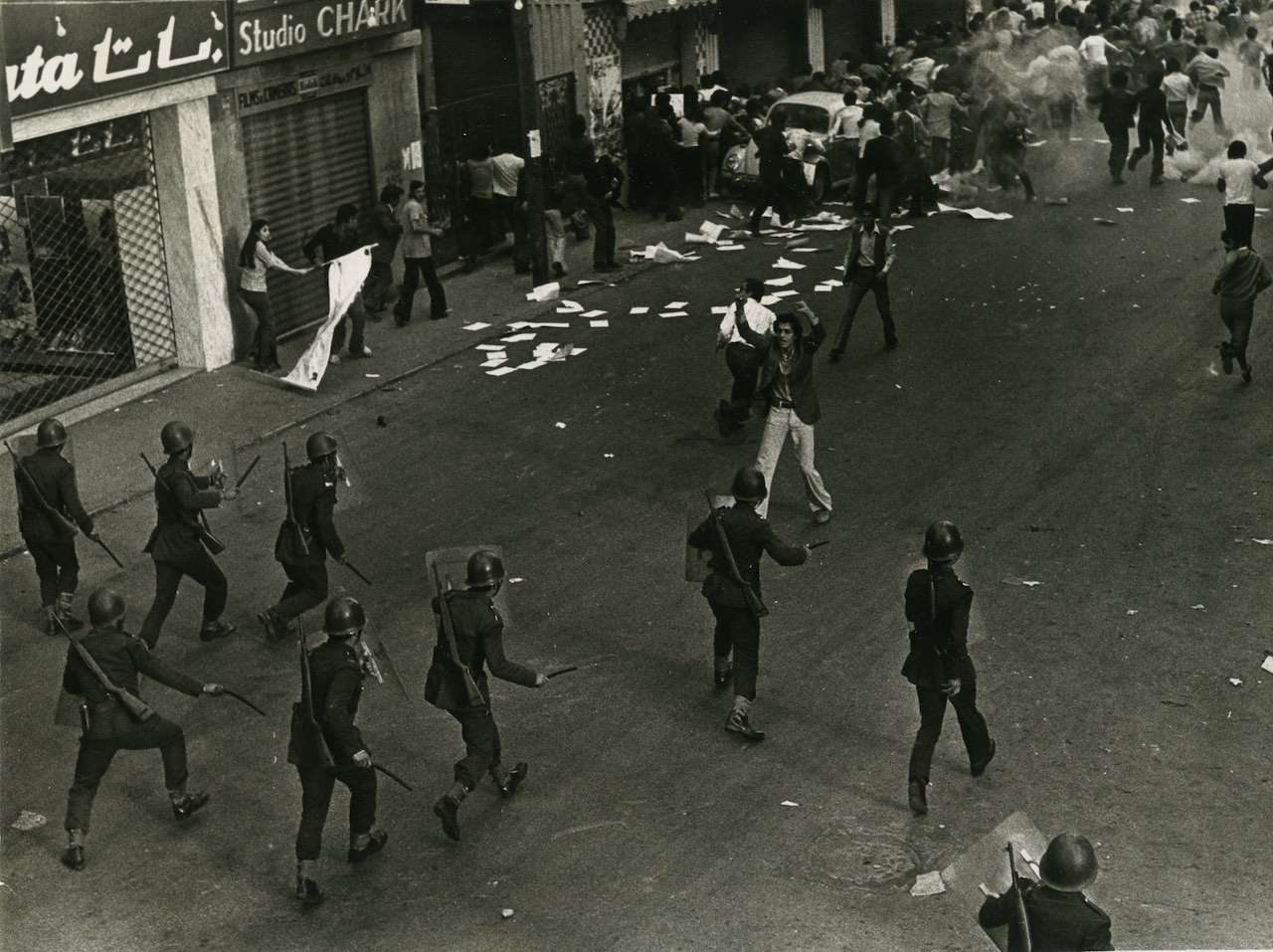
Individual violent incidents also occurred on campus.
For example, on August 5, 1985, a bomb exploded inside the university, killing one student and injuring three others. (Civil Society Knowledge Centre)
These attacks reinforced the constant danger faced by students and faculty during the conflict.
Assassinations and Kidnappings
The university community also experienced targeted attacks during the war.
Two major incidents shocked the campus:
Kidnapping of President David Dodge (1982)
In July 1982, AUB president David Dodge was kidnapped by armed militants and held hostage for nearly a year before his eventual release.
Assassination of President Malcolm Kerr (January 18, 1984)
Kerr was shot outside his office on campus by gunmen affiliated with militant groups.
These events demonstrated how the political violence of the civil war had penetrated even academic institutions.
Continuing Education Despite War
Despite violence and disruptions, the university attempted to maintain academic continuity.
Even while the hospital was treating thousands of casualties, academic programs continued operating.
Medical education remained active. During one wartime year:
- 268 medical students continued their training
- 127 physicians graduated in June despite the ongoing conflict. (AramcoWorld)
Faculty members often adjusted schedules depending on security conditions.
Courses were sometimes shortened or postponed, and exams could be delayed if fighting intensified.
Yet the university rarely closed entirely for long periods.
Temporary Closures and Reopening
At times, however, the intensity of fighting forced temporary shutdowns.
In 1989, heavy artillery bombardment forced the university to close its campus for several months.
When a cease-fire was announced later that year, the university reopened.
Thousands of students returned despite the risks. At the time, AUB had about 5,300 students from across the Middle East, Africa, and Asia, although many international students chose not to return due to safety concerns. (Upi)
Students described running through campus corridors during shelling and struggling to concentrate on their studies amid constant danger.
The Psychological Toll on Students
The psychological impact of studying during the civil war was immense.
Many students experienced:
- anxiety due to constant shelling
- loss of family members or homes
- financial hardship caused by the collapsing economy.
Yet the university environment provided a sense of normalcy.
Attending lectures, writing papers, and preparing for exams helped students maintain structure in their lives.
For some, education became a symbol of hope.
The End of the Civil War (1990)
The Lebanese Civil War officially ended in October 1990 following the implementation of the Taif Agreement.
By that time, the war had lasted 15 years, devastated Lebanon’s infrastructure, and transformed its political system.
Yet the American University of Beirut had survived.
Despite bombardments, assassinations, kidnappings, and economic crises, the institution continued operating through most of the conflict.
Legacy of AUB During the Civil War
The story of AUB during the Lebanese Civil War illustrates the resilience of educational institutions during periods of national crisis.
Students who attended the university during the war often describe their education as transformative.
They learned not only academic subjects but also resilience, adaptability, and the importance of dialogue in divided societies.
Many graduates of that generation later became doctors, journalists, engineers, and policymakers across the Middle East and beyond.
Conclusion
The experience of students at the American University of Beirut between 1975 and 1990 offers a remarkable example of perseverance.
In a country where 150,000 people died and hundreds of thousands were wounded or displaced, thousands of students continued attending classes and pursuing knowledge. (American University of Beirut)
They studied through bombardments, crossed militia checkpoints to reach campus, and watched their professors continue teaching despite enormous risks.
For these students, education was more than a career path—it was an act of resilience.
Even during one of the most destructive conflicts in modern Middle Eastern history, the pursuit of knowledge continued on the hillside campus overlooking the Mediterranean.